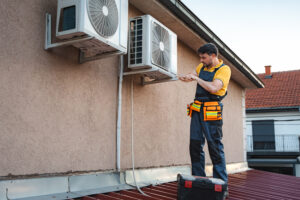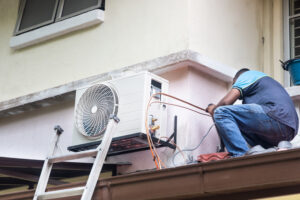
Air conditioners play an important role in keeping homes comfortable during the hottest months of the year. However, even a well-functioning system can develop hidden issues over time that reduce cooling performance and increase energy consumption. At My Guy Cooling & Heating LLC, professional AC Diagnostics help homeowners identify small problems before they turn into expensive repairs. Whether you need an AC diagnostic or a complete HVAC diagnostic in Casa Grande, AZ, regular inspections can improve efficiency, extend system lifespan, and maintain reliable indoor comfort.
What Is an AC Diagnostic?
An AC diagnostic is a structured evaluation in which a technician tests how your air conditioner is actually operating, compares those measurements with what the equipment should be doing, and works out what is behind a problem such as weak cooling, uneven temperatures, short cycling, or higher energy use. A diagnostic identifies the cause. It is not a repair, and it does not guarantee savings.
This guide explains what a diagnostic typically covers, what it can and cannot confirm, how it differs from maintenance, and what you can safely check yourself first. The exact tests vary with the equipment, the symptoms, and the weather on the day of the visit. If you want to see how our own service works, read about our AC diagnostic service, or see the AC diagnostic cost guide for pricing factors. We work with homeowners in San Tan Valley, Casa Grande, Florence, and nearby Arizona communities, where air conditioners run hard for much of the year.
AC Diagnostic at a Glance
| Question | Short answer |
|---|---|
| What is it? | A technician’s testing and evaluation of how your AC is operating |
| What does it involve? | Airflow, filters and coils, thermostat and controls, electrical components, refrigerant-side performance, and temperature measurements, as relevant to the symptoms |
| What does it tell you? | The most likely cause of a problem, and how confident the technician is |
| What is it not? | A repair, a guarantee of lower bills, or a promise that nothing else will ever fail |
| What comes next? | A repair, maintenance, monitoring, or, in some cases, a replacement discussion, based on the findings |
Signs Your Air Conditioner May Need a Diagnostic
These symptoms are reasons to investigate. They are not proof of a particular fault, and several different problems can cause the same symptom.
| Symptom | Possible causes (not confirmed) | What a technician may check |
|---|---|---|
| Weak cooling | Restricted airflow, dirty coils, low refrigerant charge, failing components | Airflow, coil condition, refrigerant-side performance, electrical operation |
| Uneven temperatures between rooms | Airflow imbalance, duct restrictions, blower problems | Vents, filter, blower operation, supply and return airflow |
| Short or frequent cycling | Thermostat issues, airflow restriction, electrical or control faults | Thermostat operation, controls, safety switches |
| Unusual noises | Worn motor or fan parts, loose components | Motors, fan assemblies, mounting |
| Higher electric bills with no change in use | Reduced airflow, dirty coils, refrigerant charge problems | System performance against equipment specifications |
| Weak airflow at vents | Dirty filter, blocked return, blower or duct issues | Filter, return path, blower, ductwork |
| Thermostat reading does not match the room | Placement, sensor, or wiring issues | Thermostat accuracy and control signals |
If you see ice on the indoor coil or refrigerant line, turn the system off at the thermostat, let it thaw, and call a technician rather than running it.
What a Professional AC Diagnostic Typically Includes
Not every visit includes every test. A technician chooses tests based on the symptoms and what the first readings show. An AC evaluation of this kind usually draws on the areas below.
Airflow, Filters, and Coils
Airflow is one of the first things to check because many cooling complaints trace back to it. A technician may look at the filter, the indoor and outdoor coils, the blower, and the return and supply paths. According to the U.S. Department of Energy, dirty filters reduce airflow and system efficiency, and dirt on coils reduces the system’s ability to cool. In Arizona’s dusty conditions, outdoor coils can load up with debris faster than many homeowners expect.
Thermostat and Controls
A technician may confirm that the thermostat is communicating with the equipment, responding to settings, and sensing temperature reasonably. A thermostat problem can look like a mechanical problem, and the reverse is also true, which is why controls are checked early.
Electrical Components
Technicians may test voltage, current draw, capacitors, contactors, and motor operation. This work involves energized equipment and should only be done by a qualified professional. Homeowners should not open electrical panels or handle wiring.
Refrigerant-Side Performance
Refrigerant charge affects capacity and efficiency, and ENERGY STAR lists checking the refrigerant charge among standard maintenance items. A technician may take pressure and temperature readings to judge whether the system is operating as expected, and may look for signs of a leak. Handling refrigerant requires training and certification, so this is not a homeowner task.
Temperature Measurements and Operating Conditions
A technician may measure temperatures at the return and supply sides of the system and interpret them against indoor conditions, outdoor temperature, and the manufacturer’s data for that equipment. No single reading proves a diagnosis. The conclusion comes from several readings that point the same way.
What AC Diagnostics Can and Cannot Tell You?
A diagnostic can usually narrow down why a system is underperforming and point to the component or condition most likely responsible. It has limits. Some faults are intermittent and may not appear during the visit. A symptom is not the same as a confirmed fault, and a technician may recommend a repair, a follow-up test, or monitoring when the evidence is not conclusive. A diagnostic also does not predict future failures or guarantee that nothing else will wear out.
How a Diagnostic Can Help With Efficiency
Efficiency losses often come from conditions a diagnostic is designed to find. The Department of Energy notes that dirty filters and coils reduce efficiency, and that an air conditioner performs best when its refrigerant charge matches the manufacturer’s specification. Airflow restrictions, dirty coils, and refrigerant charge problems can all make a system run longer to deliver the same cooling.
That does not mean every diagnostic lowers your bill. If the system is operating as designed, the diagnostic may simply confirm that. When a fault is found and corrected, the system may recover performance it had lost, and the size of any change depends on the fault and the home.
AC Diagnostic vs Maintenance vs Repair
| Diagnostic | Maintenance | Repair | |
|---|---|---|---|
| Purpose | Find the cause of a problem or performance concern | Keep the system clean and in working order on a schedule | Fix a confirmed fault |
| When it is used | Symptoms, or when performance seems off | Regular schedule, often before cooling season | After a fault is identified |
| Typical result | Findings and recommendations | A cleaner, checked system | A corrected component or condition |
A system that seems to work fine may still benefit from seasonal maintenance. That is maintenance, not necessarily a diagnostic. If a problem is already visible, a diagnostic is usually the right first step before approving repairs. Our AC repair service and the broader AC repair and maintenance guide cover the next steps.
What You Can Safely Check Before Calling
A few simple observations can save time and give the technician useful information. Check that the thermostat is set to cool, set below the room temperature, and has working batteries if it uses them. Look at the air filter and replace it if it is clearly dirty. Make sure supply vents and return grilles are not blocked by furniture. Keep the area around the outdoor unit clear of leaves, boxes, and debris, without removing any panels. Note whether a breaker has tripped, and if it trips repeatedly, stop resetting it and call a professional.
Do not open the equipment, handle refrigerant, or touch wiring. Write down what you noticed, when it started, and whether it happens at certain times of day, because intermittent faults are easier to find with that detail.
What Happens After a Fault Is Identified
The technician should explain what was found, what evidence supports it, and what the options are. Options may include a repair, a part replacement, further testing, or, for older or heavily worn equipment, a conversation about replacement. After a repair, a good technician will recheck system operation to confirm the problem is resolved. If repair is not the best path, see our AC installation service and the AC repair cost guide for context.
When to Schedule an AC Diagnostic
Schedule one when you notice weak cooling, uneven temperatures, unusual noises, frequent cycling, or a rise in energy use that you cannot explain. It is also reasonable to book service after a heavy dust event or storm, or when the system struggles during the first hot stretch of the season. For routine upkeep with no symptoms, ask about maintenance instead.
Frequently Asked Questions
What is an AC diagnostic?
It is a technician’s testing and evaluation of how your air conditioner is operating, used to identify the likely cause of a cooling or performance problem.
What does an AC diagnostic include?
It depends on the symptoms and equipment, but it commonly involves checks of airflow, filters and coils, thermostat and controls, electrical components, refrigerant-side performance, and temperature measurements.
Can an AC diagnostic tell me why my air conditioner is not cooling?
Often it can identify the most likely cause, such as an airflow restriction, a control problem, an electrical fault, or a refrigerant-related issue. Intermittent faults can be harder to catch in a single visit.
When should I schedule an AC diagnostic?
When the system shows symptoms such as weak cooling, uneven temperatures, short cycling, strange noises, or unexplained higher energy use.
What is the difference between AC diagnostics and AC maintenance?
A diagnostic investigates a problem. Maintenance is scheduled upkeep, such as cleaning and checking components, to keep the system in good working order.
What is an AC evaluation?
The term is used loosely. In most cases, it means an assessment of how well the system is cooling and what may be limiting its performance, which overlaps with a diagnostic.
How long does an AC diagnostic take?
The time depends on the system and the problem.
Does an AC diagnostic include repairs?
A diagnostic identifies the problem. Repairs are a separate step.
Need Help Finding Out Why Your AC Is Underperforming?
If your system is not cooling the way it should, call My Guy Cooling & Heating at (480) 875-5705 or request service online to talk through a diagnostic visit.